Introduction
Have you ever paused mid-smile and wondered why a tiny overlap feels like a spotlight on imperfection? I see that moment often—people noticing the small things that shape confidence. lulusmiles shows up in those conversations as an option, a question, a hope. Picture this: one in every three adults reports some form of tooth crowding, and many delay action for years (work, kids, cost — you know the list). So what really matters when you decide to treat crowded teeth: speed, comfort, cost, or something quieter—predictability? I want to walk through that with you, slowly and plainly, because the data alone doesn’t tell the whole story. Let’s move from the feeling to the facts, and then to the choices that follow.
Why Traditional Fixes Often Miss the Mark
What’s actually going wrong?
When we talk about crowded teeth, the usual fixes—metal braces, extractions, bulky expanders—have clear limits. I’ve treated cases where the arch form was forced rather than guided. That can mean longer treatment times and awkward side effects. From a technical point of view, the old approaches rely on broad mechanical force and simple brackets, not on precise alignment algorithms or calibrated orthodontic force calibration. That mismatch causes relapse or discomfort. Look, it’s simpler than you think: if the device moves teeth in crude steps, the biology fights back. — funny how that works, right?
Let me be blunt. Traditional systems rarely factor in modern materials science or digital planning. They assume uniform response across patients. In contrast, the real world throws variation at us: bone density, tooth shape, prior restorations. Those variables need targeted planning—think digital scans, alignment algorithms, even considerations similar to signal processing in engineering to predict movement. Many patients also underestimate day-to-day pain or speech changes. I’ve seen people stop treatment because the social cost felt higher than the expected benefit. That hidden pain point—social friction—is rarely discussed in tech specs. And yes, power converters and edge computing nodes sound out of place here, but the point is that precision systems in other industries teach us a lot about control and feedback in orthodontics.
New Principles for Clear, Comfortable Progress
What’s Next
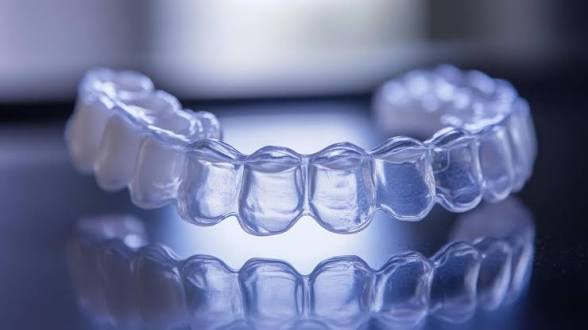
Now I want to look forward. I believe the best path blends digital planning with patient-first design. Modern systems use precise force vectors and biocompatible materials to nudge teeth gently. For example, clear aligner solutions have evolved to incorporate staged force delivery, improved attachments, and resin blends that behave predictably in the mouth. When you read product claims, pay attention to the planning engine—does it use robust 3D simulation? That’s where alignment algorithms and modeling matter. We also borrow ideas from other fields: iterative testing, feedback loops, even a bit of signal processing thinking to anticipate movement patterns. The result can be smoother treatment with fewer mid-course changes.
I want to mention practical choices I use when advising someone: check for clinical data on movement accuracy, ask about material longevity (biocompatible materials matter), and see whether the provider offers easy mid-treatment reviews. Also, ask for case examples—real before-and-after paths. Those stories tell you more than specs. And one more point—if you value discretion, research the best invisible braces available for predictable outcomes. — and that’s the point.
Choosing Well: Three Metrics I Trust
I’ve learned to measure options by three clear metrics. First, predictability: does the system’s planning predict final tooth positions reliably? Second, patient burden: how much discomfort, speech change, or appliance maintenance will there be? Third, adaptiveness: can the program handle surprises mid-treatment without a full restart? Use these when you compare offers. I often run scenarios with patients—what matters most to them: speed, cost, or subtlety? We weigh trade-offs together.
In short, I care about outcomes that feel human, not just efficient. I want treatment that fits your life and your story. If you want to explore options or see real cases, lulusmiles is a place to start—because we both want a practical path to a confident smile. lulusmiles